Can I Sell an RV With Water Damage in Florida?
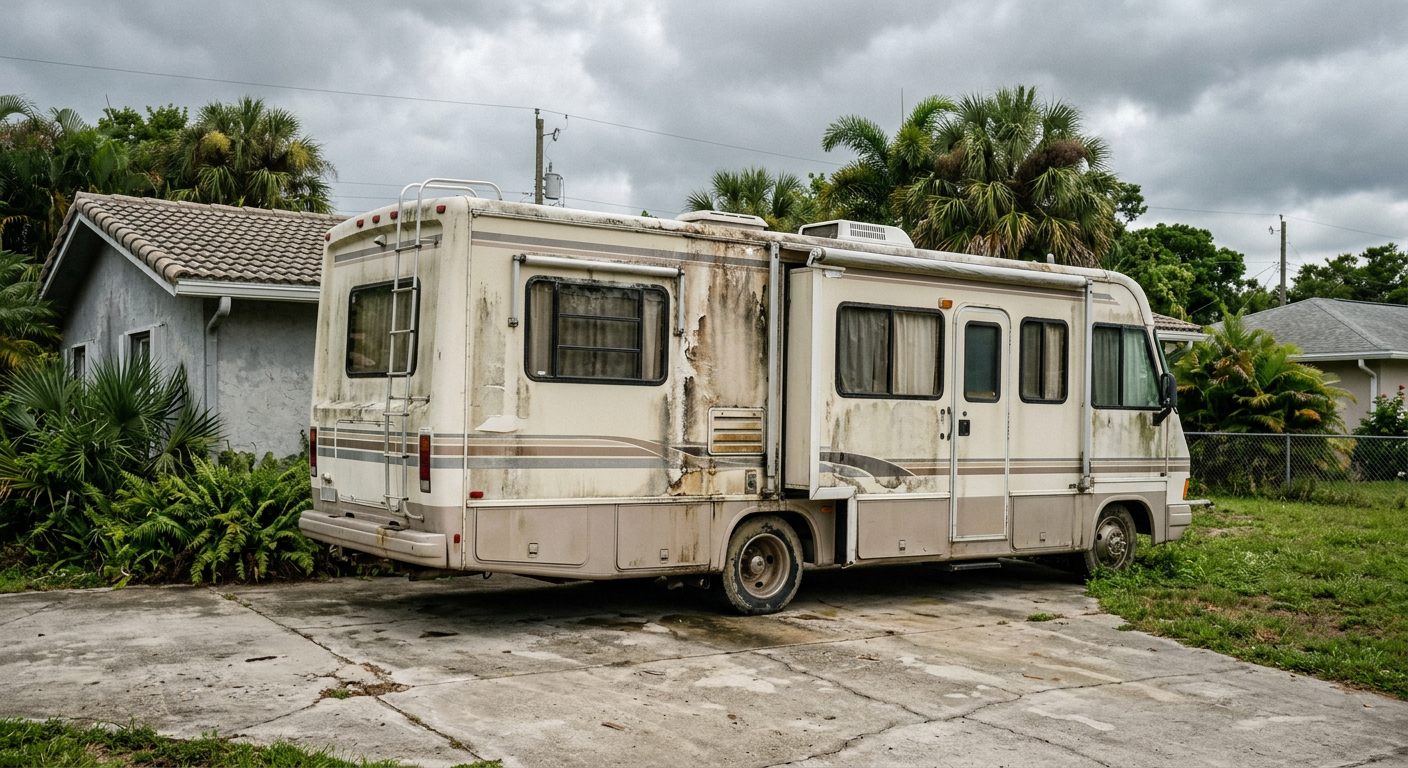
Water damage is one of the problems RV owners dread most. A small roof leak can turn into stained walls. A bad seal around a slide can lead to a soft floor. Moisture hidden behind paneling can become a much larger repair than anyone expected.
And in Florida, where RVs spend their lives dealing with intense sun, heavy rain, humidity, and storms, water intrusion is an especially important concern.
If your RV has developed water damage, you may be wondering whether it is worth repairing — or whether anyone will buy it in its current condition. Yes, damaged RVs can still be sold. The real question is whether repairing it first makes financial sense.
Get an offer for your water-damaged RV today.
What Counts as RV Water Damage?
- Roof leaks
- Leaking windows
- Damaged slide seals
- Soft floors
- Stained ceilings
- Swollen wall panels
- Delamination
- Rot around roof vents
- Water intrusion around an air-conditioning unit
- Damaged subflooring
- Musty odors or visible moisture damage
A small leak that was quickly repaired is very different from years of unnoticed water intrusion. That distinction can have a major effect on the RV's value.
Why Water Damage Makes RVs Difficult to Sell Privately
Private buyers tend to be especially cautious about moisture because what is visible may not show the full extent of the problem. A small stain in a ceiling can sometimes be cosmetic. Other times it can indicate damage inside the roof or wall assembly.
That uncertainty can make prospective buyers nervous, result in repeated inspections, or lead to large negotiations over price. For owners who already know they do not want to repair the RV, selling directly to a buyer willing to consider damaged units can be much simpler. You can sell your RV to Gulf Coast RV & Boat Buyers without preparing it for retail.
Should You Repair the RV Before Selling It?
It depends on the extent of the damage and the potential value of the RV. A relatively minor leak with an inexpensive fix may be worth repairing. But when the roof needs extensive work, a wall has delaminated, sections of the floor are soft, or the slide has leaked for years, repair costs can rise quickly.
Before authorizing major work, ask yourself:
- What the RV will realistically be worth after the repair
- How much the repair will actually cost
- Whether additional hidden damage could be discovered
- How long the repair may take
- Whether you want to continue owning the RV during the process
If the expected repair bill approaches or exceeds the increase in resale value, selling it as-is deserves consideration.
Can You Sell an RV With a Soft Floor?
Yes, although a soft floor will affect value. Soft flooring often suggests moisture has affected the subfloor or supporting material underneath the finished flooring. The important thing is to describe where the soft areas are and approximately how extensive they appear to be.
What About RV Delamination?
Delamination occurs when layers in an RV wall begin separating. From the outside, it may appear as bubbles, waves, or bulges in the fiberglass sidewall. Water intrusion is one possible cause.
Delamination can be expensive to repair and can make a traditional retail sale more difficult. However, an RV does not automatically become worthless simply because delamination is present. Its age, make, model, drivetrain, generator, appliances, frame, axles, and other usable components still matter.
What If the Roof Still Leaks?
You should disclose active leaks when requesting an offer. You do not necessarily need to pay for a new roof just to find out whether someone will purchase the unit.
Describe where the leak appears, how long it has been happening, any repairs already attempted, whether there are visible stains, whether walls or floors feel soft, and whether the RV has been covered or stored indoors.
Motorhomes Can Retain Value Even With Interior Damage
A motorhome is more than its interior walls and flooring. Depending on the unit, value may also come from the engine, transmission, generator, chassis, air-conditioning systems, appliances, slides, wheels and tires, electrical components, furniture, metal, and other recyclable material.
That is why severe cosmetic or interior damage does not automatically mean the RV has no value.
What Types of Water-Damaged RVs Can Be Considered?
- Class A motorhomes
- Class B camper vans
- Class C motorhomes
- Travel trailers
- Fifth wheels
- Toy haulers
- Pop-up campers
- Older campers
- Units with roof damage
- Units with soft floors
- Units with delamination
- Non-running motorhomes with water damage
The exact offer depends on the specific RV.
What Information Helps Determine an Offer?
- Year
- Manufacturer
- Model
- Approximate mileage for motorhomes
- Length
- Engine and drivetrain condition
- Whether the generator operates
- Location
- Water-damage areas
- Photos of the exterior and interior
- Photos of visible damage
- Whether the unit can be driven or towed
Private Sale, Consignment, or Direct Buyer?
A private sale may generate a higher price when the RV is clean and market-ready, but damaged units can attract extensive negotiations and inspections. Consignment can reduce some of the work involved in selling, although a consignment operation may be selective about the condition it accepts.
A direct RV buyer can be useful when convenience and selling the RV as-is are more important than preparing it for retail. The goal is to compare the likely net amount you will receive against the money, time, and effort required for each option. RV buyers near you across Florida can evaluate your unit in its current condition.
Florida RV Owners Do Not Have to Keep Pouring Money Into a Damaged Unit
One of the easiest traps to fall into is continuing to repair an RV simply because money has already been spent on it. Another repair does not recover the money spent on previous repairs.
Make your decision based on the RV's condition today and what makes financial sense going forward. If you are tired of chasing leaks, replacing seals, repairing soft floors, or paying storage costs on an RV you no longer use, selling it as-is may be the cleanest solution.
Frequently Asked Questions
Can I sell an RV with a leaking roof?
Potentially, yes. Disclose the leak and the known condition when requesting an offer.
Do I need to repair a soft floor first?
Not necessarily. You can request an as-is offer before deciding whether repair costs are worthwhile.
Is an RV with delamination worthless?
No. Delamination affects value, but other components and the overall unit can still retain value.
Can I sell a non-running motorhome that also has water damage?
Potentially, yes. Mechanical and water damage can both be factored into an as-is evaluation.
Should I hide old water damage that has been repaired?
No. Be straightforward about known condition and previous repairs.