How to Sell a Boat With a Bad or Blown Engine in Florida
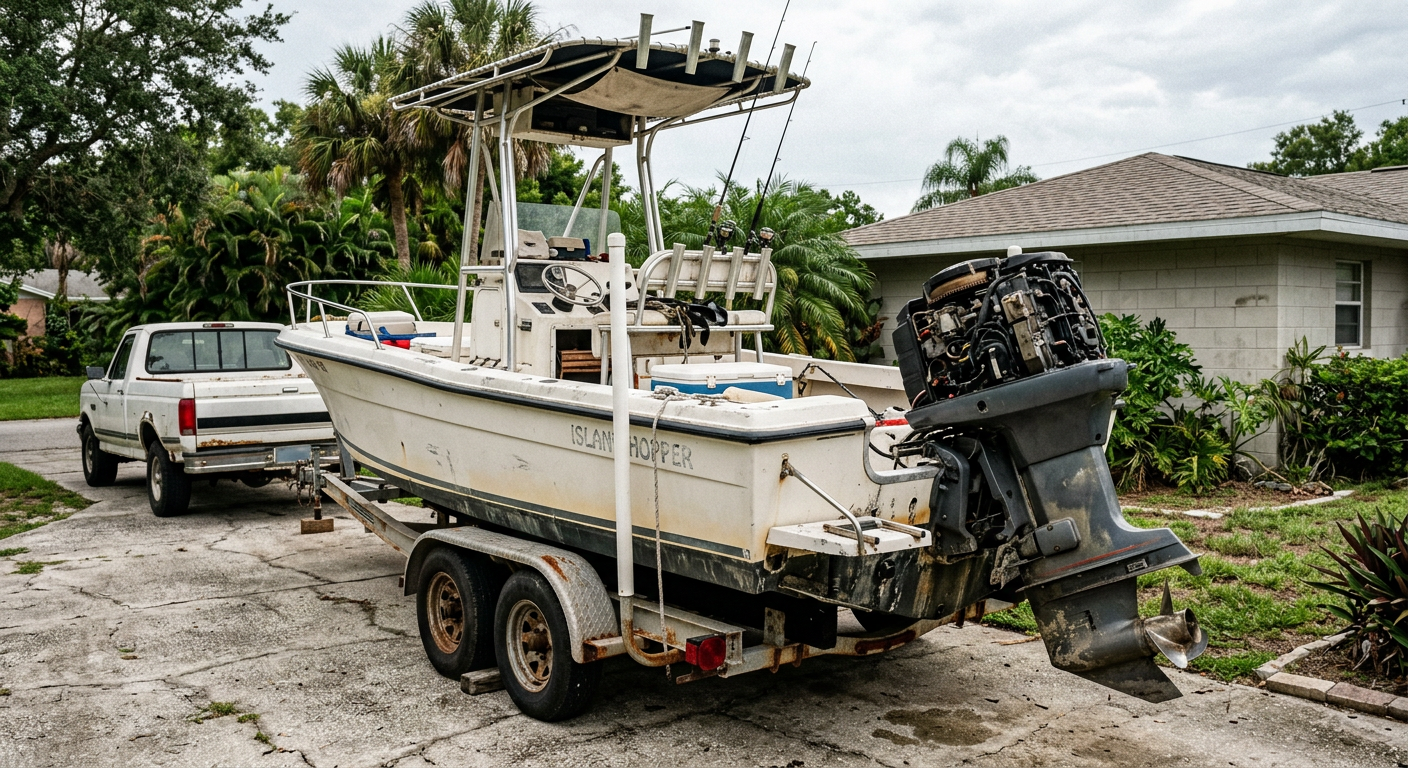
A boat can go from weekend fun to expensive driveway decoration very quickly. One overheating problem. One failed outboard. One seized engine. One repair estimate. Suddenly you are deciding whether to put thousands of dollars into a boat you may not even want anymore.
If the engine has failed, you still have options. A boat with a bad engine can still have value, and you do not necessarily need to repair or repower it before selling.
Get an offer for your non-running boat today.
Can You Sell a Boat With a Blown Engine?
Yes. A failed engine affects the value of a boat, but the engine is only one part of the vessel. Depending on the boat, there may still be value in the hull, trailer, electronics, T-top, fuel system, steering, lower unit, outdrive, propeller, interior components, fishing equipment, hardware, controls, and other mechanical components.
A desirable hull paired with a failed engine can still attract interest from buyers who understand boats and repair costs. You can sell your boat to Gulf Coast RV & Boat Buyers without repairing the engine first.
Why Engine Problems Make Boats Hard to Sell Privately
Most retail boat shoppers want something they can use immediately. A private buyer may want a compression test, a water test, a mechanic's inspection, exact repair estimates, and confirmation that other systems work.
Once an engine has failed, the number of casual buyers shrinks quickly. That does not mean the boat has no market. It means the market changes. Instead of targeting someone looking for a turnkey boat, you may need a buyer comfortable purchasing it as-is.
Should You Repair the Engine Before Selling?
This decision should be based on math rather than emotion. Get a realistic estimate for the repair or replacement, then compare that cost with the expected selling price afterward.
If a major engine repair would cost thousands of dollars but only increase the boat's sale value by a similar amount, you are taking on repair risk without creating much additional return.
Repairs can also uncover more problems. What starts as one engine issue may reveal corrosion, electrical problems, fuel-system issues, or other deferred maintenance. Sometimes repairing first makes sense. Other times selling as-is is the better business decision.
What Does “Bad Engine” Actually Mean?
Not every engine problem is the same. A buyer will want to understand whether the motor:
- Cranks but will not start
- Overheats
- Has low compression
- Has water intrusion
- Has a damaged lower unit
- Knocks
- Has a seized powerhead
- Has electrical problems
- Needs fuel-system work
- Has been partially disassembled
- Is completely missing
If you have a mechanic's diagnosis, share it. If you do not know exactly what failed, do not guess. Simply explain what happened the last time the boat was used.
Can You Sell a Boat That Has Been Sitting for Years?
Yes. In Florida, boats often sit after an engine problem because the owner plans to repair them “eventually.” Eventually turns into another season, then another. Meanwhile, fuel ages, batteries die, upholstery deteriorates, wiring corrodes, trailers rust, tires dry out, and covers fail.
The sooner you decide what you want to do with the boat, the more deterioration you may be able to avoid.
Does the Trailer Matter?
Absolutely. For many smaller and mid-size boats, a usable trailer can make transportation significantly easier and may contribute to the total package value.
Tell the buyer whether a trailer is included, whether the tires hold air, whether the wheel bearings appear usable, whether the lights work, whether there is significant rust, and whether the boat can currently be moved. If the trailer is unsafe, disclose that too.
What If the Boat Is Stored at a Marina?
A boat sitting at a marina creates another financial consideration: storage. If you are paying monthly slip, dry-stack, or yard fees for a boat you no longer use, every additional month reduces the amount you ultimately recover from owning it.
When comparing options, calculate the entire cost of keeping the boat — not only the engine repair.
What If It Has an Inboard or Sterndrive?
Boats with inboard, sterndrive, and outboard systems can all develop expensive mechanical problems. A blown engine does not automatically mean the entire propulsion system is worthless. Depending on the setup, parts of the system may still be usable.
When requesting an offer, include the engine manufacturer and any information you know about the drive. Examples include Mercury, MerCruiser, Yamaha, Suzuki, Honda, Evinrude, and Volvo Penta. Photos of the motor and drive system can also help.
What About Two-Engine Boats?
If a boat has twin engines and only one has failed, say so. A vessel with one operational motor and one damaged motor is a very different situation from a boat where both engines are seized. Provide the condition of each engine separately.
What Determines the Value of a Boat With Engine Damage?
Boat Make and Model
Certain hulls, center consoles, pontoons, and fishing boats retain stronger demand than others.
Age
Newer boats generally have more potential value outside the failed engine.
Hull Condition
Structural damage can matter more than cosmetic fading or dirty upholstery.
Engine Situation
A minor repair is very different from a completely seized or missing powerhead.
Electronics and Equipment
GPS units, trolling motors, power poles, and other equipment may add value depending on age and condition.
Trailer
A solid, usable trailer is an important part of many transactions.
Location
A boat that is accessible on a trailer is easier to move than one that requires special marina coordination.
Should You Part the Boat Out Yourself?
It is possible, but it is rarely as easy as it sounds. Selling parts individually means removing components, identifying exact part numbers, photographing everything, listing items, answering messages, shipping parts, dealing with buyers, disposing of what remains, and eventually figuring out how to remove the leftover hull.
For someone with mechanical knowledge, tools, storage space, and time, parting out a boat can make sense. For an owner who simply wants it gone, selling the entire boat is usually far easier. See the types of boats we buy.
Do Not Give the Boat Away Before Finding Out What It Is Worth
Owners sometimes assume that a blown motor means the boat is worthless. Then they pay someone to haul it away. Before doing that, get an actual evaluation. A non-running boat may still have enough value that a buyer is willing to purchase the whole package. Cash for boats in Florida is available throughout the state.
Frequently Asked Questions
Can I sell a boat if the outboard does not run?
Yes. Non-running outboards affect price but do not automatically prevent a boat from being sold.
Can I sell a boat with a seized engine?
Potentially, yes. Give the buyer as much information as possible about the boat and the engine failure.
Should I install a new motor before selling?
Only if the expected increase in value clearly exceeds the full cost and risk of repowering.
Will a buyer purchase a boat that has been sitting outside?
Potentially. Condition, age, hull, equipment, and trailer condition will all affect the evaluation.
Is a boat without a trailer harder to sell?
Transportation is more complicated, but a missing trailer does not necessarily prevent a sale.